The Most Powerful Thing in Any Recovery Room Isn’t the Program. It’s the Person Next to You.
CaringConnect
All News
Peer Support & Mutual Aid | Behavioral Health & Community Services
Peer Support & Mutual Aid | Behavioral Health & Community Services
I have sat in a lot of rooms.
Crisis rooms. Recovery rooms. Case management offices with fluorescent lighting that hums just a little too loud. Group sessions where someone said something so honest it changed the temperature of the air. Emergency departments at two in the morning. Churches that opened their basements before anyone else would. Community centers that were underfunded and overstretched and still, somehow, full of people who refused to stop showing up.
I have sat in those rooms as someone there to help, and I have sat in those rooms as someone who needed it. And I want to tell you something that I know all the way down to my bones, something that no clinical training taught me but that every single one of those rooms confirmed:
The most transformative force in any of those spaces was never the program. It was never the curriculum, the evidence-based model, the funding structure, or the intake process. It was the person in the room who had been through something, who had survived something, who had sat in the darkness and found their way back to a room with light in it, and who was now sitting across from someone else who was still in the dark and saying: I see you. I know this. You are not alone in this. And I promise you there is a way through.
That is peer support. That is mutual aid. And I believe with everything I have that it is one of the most powerful and undervalued forces in behavioral health today.
What I Have Seen
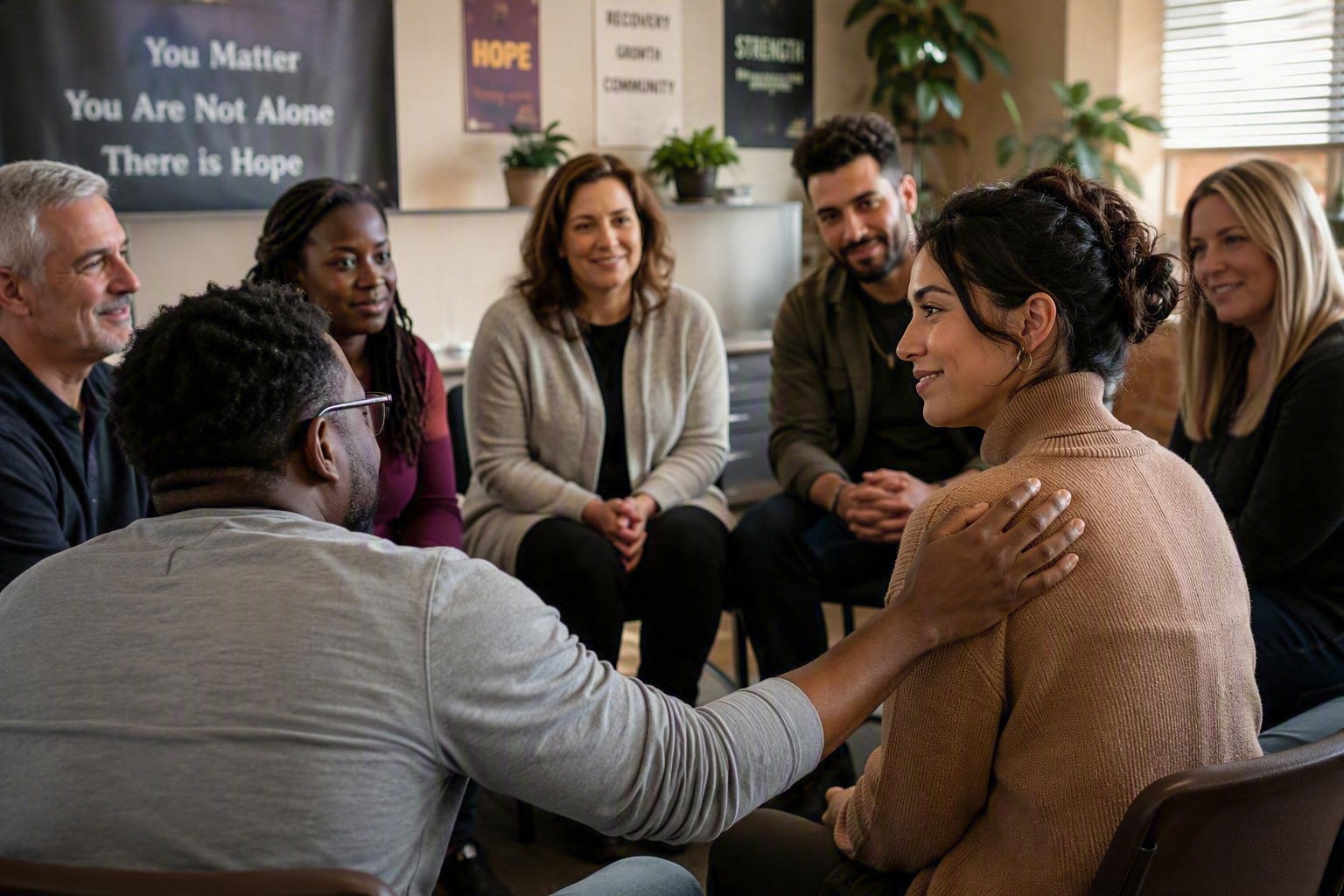
I have seen a person who had been written off by system after system, who had cycled through treatment and relapse and treatment again and had started to believe that maybe they just weren’t the kind of person who got to be okay, walk into a peer support group and hear someone across the circle say “I was where you are.” Not as a platitude. Not as a script. But as a real accounting of real darkness, delivered by someone still standing.
I watched that person’s face change. I watched something shift in them that I cannot name clinically but that I have never forgotten. It was the moment the story they had been telling themselves about who they were and what was possible for them cracked open just enough for something else to get in.
A professional did not do that. I did not do that. Someone who had lived it did that. Someone whose credibility was built not in a classroom but in survival.
I have seen it in substance use recovery rooms where a person with twenty years clean and a life rebuilt from wreckage stood up and talked about what it actually felt like to want to use again, not the sanitized version, the real version, and watched the room exhale. Because someone had finally said the thing everyone was carrying and pretending they weren’t. That is what peer support does. It gives permission to be human. Fully, messily, honestly human.
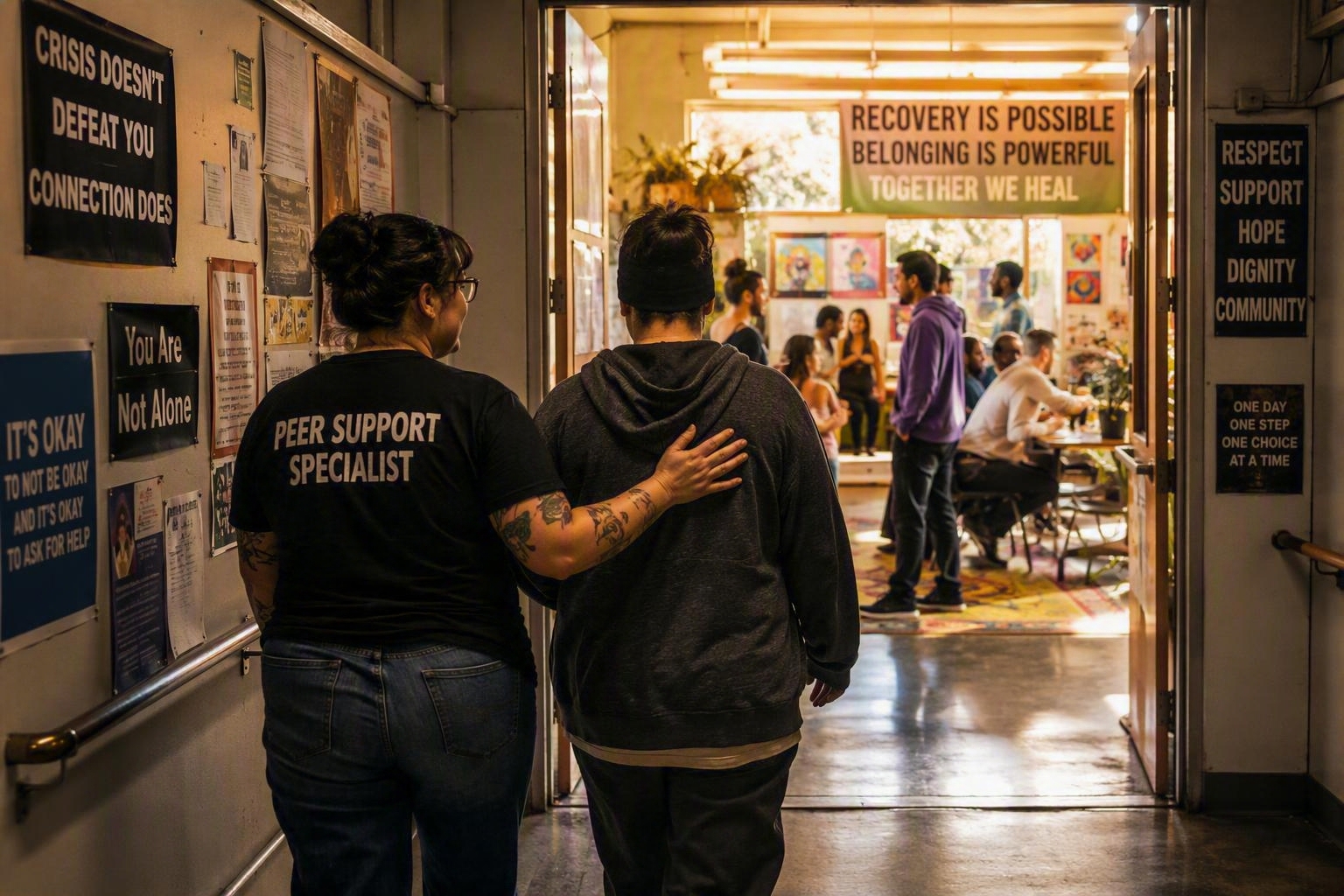
I have seen it in mental health settings where a peer specialist walked alongside someone navigating a system so complicated and so dehumanizing that the person had nearly given up on getting help at all. And because the peer specialist had navigated that same system from the inside, had fought those same battles and filled out those same forms and sat in those same waiting rooms, they could say: “Let me walk this with you. I know where the doors are.” And that person got the help they needed. Not because the system got better. Because someone who understood it from the inside refused to let them get lost in it.
I have seen peer support change the entire energy of a behavioral health program. I have seen organizations that were clinically excellent but culturally cold transform when they brought lived experience into the room as a professional asset rather than a background detail. I have seen people who had only ever been the recipient of services step into the role of provider and watch their own recovery deepen because of it. Peer support heals in both directions. That is not an accident. That is by design.
Why This Is Different From Everything Else
I want to be careful here, because I am not here to diminish clinical care. Therapy matters. Medication matters. Case management matters. Crisis intervention matters. I have seen all of those things save lives and I believe in them.
But there is something that clinical care cannot fully replicate, and pretending otherwise does a disservice to both the clinicians working hard to provide it and the people who need what only lived experience can offer.
When you have been through something, really through it, not just studied it or witnessed it but lived inside it, you carry a kind of understanding that cannot be taught. You know what it feels like to not want to get out of bed and to do it anyway. You know what it feels like to call a helpline and hang up twice before staying on. You know what it feels like to be handed a safety plan by someone who has never needed one, and how different it feels to receive one from someone who wrote theirs at a kitchen table at three in the morning because they had to.
That knowing is not a supplement to professional care. In many moments, it is the thing professional care cannot provide. And for a lot of people, it is the thing that makes professional care feel accessible at all.
Peer support lowers the threshold. It meets people in the space before they believe they’re worth the help. It speaks the language of “I’ve been there” when the language of clinical expertise can feel like it belongs to a world the person suffering doesn’t think they’re a part of yet.
Mutual Aid Is as Old as Community
We have given peer support a modern name and built frameworks around it, which is good, because structure and training and accountability matter. But let’s be honest about what it is at its core: it is people taking care of each other. It is the oldest form of human healing there is.
Long before there were behavioral health systems, before there were evidence-based practices and billable hours and outcome measurements, there were people sitting with each other in hard times. There were communities that survived devastating things because they refused to leave their people alone in it. Mutual aid is not a new concept. It is what human beings do when they remember that no one gets through this alone.
What is new is the intentional integration of that into formal systems of care. And that integration, when it is done right, when peer supporters are trained well, compensated fairly, and genuinely valued as part of the clinical team rather than a nice addition to it, is one of the most powerful things we can do for the people those systems exist to serve.
What I Want People to Know
If you are building a behavioral health program, a recovery community organization, a community mental health center, a crisis service, any space where people come to get better, I want you to think about who is in the room. Not just what credentials are on the wall. Who is in the room. Who among your team has walked the road the people you serve are walking? Who can look at someone who is ashamed and exhausted and barely holding on and say “me too” in a way that is true?
Because that person, given the right training and the right support and the right organizational culture to operate in, will do things in that space that no curriculum can replicate.
And if you are someone in that room on the other side, someone who has been through it and is still getting through it, I want you to know that your experience is not a liability. It is not something to hide or minimize or keep separate from what you offer to the world. Your experience is expertise. What you survived taught you something. What you carry has value. And if you ever feel called to bring that into a room full of people who need exactly what only you can offer, that call is worth answering.
I have watched peer support change people’s lives. I have watched it change the lives of the people doing the supporting. I have watched it change organizations that were willing to trust it.
I believe in it because I have seen it. Not in a study, not in a report, but in rooms. Real rooms, with real people, doing the real, hard, holy work of holding each other up.
That is the power of peer support. And it is something I will spend as long as I need to helping people understand, access, and build.
But I Also Have to Say This, Because I Have Seen It Go Wrong
Peer support, when it is not protected, drifts. Systems have a way of doing that, taking something built on authenticity and reshaping it to meet their own needs, their caseload numbers, their documentation requirements, their budget gaps. I have watched peer supporters slowly become mini case managers. I have watched them absorb clinical responsibilities they were never trained for and never meant to carry. I have watched organizations, with good intentions, lean on their peer staff so heavily and so incorrectly that those staff burned out, lost their footing in their own recovery, and left the field altogether. And when that happens, it is not just a staffing loss. It is a betrayal of what peer support is supposed to be.
Peer support that has drifted from its values is not just ineffective. It can be harmful, to the people being served who are receiving something that looks like peer connection but functions like a watered-down clinical service, and to the peer supporters themselves who are being asked to operate outside of a role they were never prepared to sustain. Fidelity to the peer support model is not a bureaucratic nicety. It is the thing that makes the whole model work. The moment a peer supporter stops being a person with shared experience walking alongside someone and starts being a system’s way of filling a gap it doesn’t want to pay a clinician to fill, something essential has been lost.
This is where RMCP comes in, and I want to be direct about it. We train peer supporters who know exactly who they are and what they are there to do. We build that clarity into every part of the training, because a peer supporter who understands their role deeply is not only more effective, they are more protected. We work with organizations to build the structures that keep peer support in fidelity: the supervision, the boundaries, the culture of respect for the role, the understanding at the leadership level of how to utilize peer staff in ways that strengthen the program rather than quietly consume the people in it. We will tell you the hard things when the hard things need to be said, because the organizations that do this well are the ones willing to hear them. If you are building a peer support program, or trying to course-correct one that has drifted, we are the people to call. Not because we have all the answers, but because we have been in enough rooms, on enough sides of this work, to know what it looks like when it is done right. And we are committed to helping you get there.